Where to start: Zero Minus Ten
His best: The Facts of Death
Read on to find out why.
Raymond Benson‘s journey to becoming a James Bond author started when his friend wrote a joke book.
That friend introduced him to his editor at the publisher, and the editor taught him how to write a proposal. Benson wrote one for a tome-length Bond encyclopaedia — The James Bond Bedside Companion — and got a contract overnight.
Few people have done more than him to keep Bond alive in the public imagination
Freddy Lowe
The book's release made him a major player in the world of 007, and for a while he worked as a writer and designer for the Bond video games. Then in the 90s, after John Gardner retired as the continuation writer, Benson was offered the job. He went on to write six Bond novels, three novelisations of the Brosnan films (Gardner had already done GoldenEye), and the first ever Felix Leiter novel, The Hook and the Eye, which came out last year.
Benson's rise to Bond stardom is a fascinating story, not least because it makes a stark contrast to today's publishing world — an overnight contract would be unheard-of now. But it is also interesting that his fiction career started out writing Bond video games based on the films. Because his books seem very inspired by the films.
Film Bond, Through and Through
Whereas Kim Sherwood's James Bond books, for example, are clear love letters to Literary Bond, Benson's books are Film Bond through and through.

Zero Minus Ten, in particular, reads like a Bond screenplay. Its opening chapter is just like a pre-titles sequence: a self-contained adventure with action, quips, and a resolution that sees Bond sleeping with the female lead. Then the next chapter cuts away to several disasters happening across the globe, without Bond present. (The films often start this way: think Tomorrow Never Dies, which spends a long time on the disaster at sea and doesn't cut back to Bond until a good while afterwards.)
Then we meet Bond again. He's briefed by the female M (based on Judi Dench, a staple of cinematic Bond), kitted out by Q (again, a character more associated with the films), and then forced to embark on a journey of near-death experiences, physical spats with henchmen, and an explosive finale that culminates in him sleeping with the girl.
So Benson certainly doesn't write like Ian Fleming. Fleming's moments of conflict focus more on strategy and psychology than on actual fighting, and any physical bust-ups end very quickly. Benson, by contrast, treats us to long and detailed descriptions of Bond striking villains' abdomens, chopping them on the throat, swinging their bodies round and kicking them in the face — all in the same sentence.
His books are a fascinating experiment in how the cinematic Bond formula comes across on paper.
Where Raymond Benson Breaks the Formula
That said, his books do sometimes divert from it. Benson's best James Bond novel, in my view, is The Facts of Death — partly because it does subvert things in interesting ways.
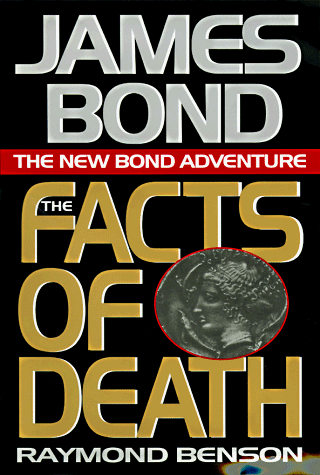
For a start, we see M with her lover, Alfred Hutchinson. This foray into M's personal life makes her vulnerable in ways we've never seen before (no spoilers). Benson also reveals that her real name is Barbara Mawdsley, which is fantastic. For some reason, I find Judi Dench's M's first name being Barbara irrationally funny.
The Facts of Death also humanises Bond more. The novel focuses a lot on his friendship with Felix Leiter, and this leads to some surprising and sweet moments between the two of them.
Then there's the strangest thing in the book. Bond gets a cold.
That may sound minor, but I thought it was a great experiment, as a cold seems so mundane for such an iconic superhero. Sadly, it's then never mentioned again and has no effect on the plot, which feels like a missed opportunity, especially as viruses are a major part of the villain's scheme. But it was still an interesting choice to show Bond's physical vulnerability, something that Benson develops further in DoubleShot, where Bond has to be accompanied on his missions because he keeps fainting.
Benson's books still experiment with the formula in small ways, then, despite being recognisably cinematic.
The Exclamation Marks!
One interesting feature of his style is that he uses a lot of exclamation marks, which I found amusing. Brits are taught at school to avoid them for being too crude. Benson clearly doesn't agree:
Someone was pulling himself onto the boat! Sunni screamed. It was Tom, the largest and strongest of the albino henchmen! (Zero Minus Ten)
Wong walked over to the man and roughly turned him onto his back. Bond was horrified to see that it was T.Y. Woo! (Zero Minus Ten)
Then the rider extended his arm at us. A pistol! (The Hook and the Eye)
New York City was a nest of spies, and I was going to help uncover them! (The Hook and the Eye)
Admittedly, that last one might strain credibility. It's Felix Leiter narrating, a seasoned agent who's uncovered spies his whole career, so he is unlikely to feel exclamation-mark-worthy excitement at the prospect.
Felix Leiter Finally Gets His Own Book
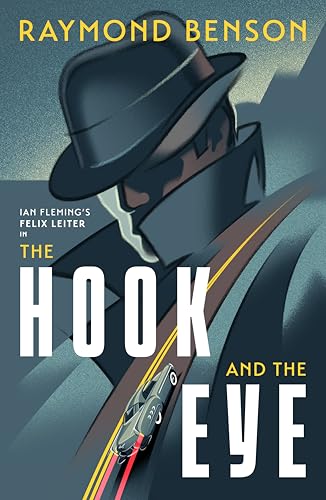
But The Hook and the Eye is still an interesting novel. It takes place after Felix's injury in Live and Let Die and explores the difficulties of carrying out espionage with a disability. One notable challenge is navigating people's infantilisation of him:
‘People observe my shuffle and the right hook, and they immediately throw an involuntary expression of pity at me. It happens all the time. In response, I simply grin at them as if it doesn't bother me at all.'
But he gets through the adventure with panache and humour (obviously — it's Felix Leiter). The book is vital reading for us Bond nerds.
The Novelisations Nobody Talks About
Speaking of vital reading for Bond nerds — Benson wrote three novelisations (Tomorrow Never Dies, The World Is Not Enough, Die Another Day), and they are almost never talked about. When Ian Fleming Publications rereleased Benson's oeuvre in an eBook omnibus, those three were not included.
That's a shame. They are novels in their own right, even if they're not original works. Admittedly, novelisations are probably only worth reading for Bond completists, but if nothing else, Die Another Day will give you a good laugh with the tsunami wave sequence. How Benson wrote that chapter with a straight face, we'll never know.
Why The James Bond Fandom Owes Him
Overall, the fandom has a lot to thank Benson for. Few people have done more than him to keep Bond alive in the public imagination. And his return to write The Hook and the Eye all these years after his last Bond novel is a testament to how valued he is by Ian Fleming Publications.
If his friend hadn't published that joke book, the Bond literary scene would look very different.
Where to start: Zero Minus Ten
His best: The Facts of Death
Follow Freddy Lowe
Views expressed are the author's own, not necessarily those of Spybrary.
What do you think? Let Freddy and 5,000 other spy fans know in our free Spybrary community, now in its ninth year.

We are on the look out for more spy fiction and espionage history opinion posts. Interested? More intel at Write for Spybrary.

Please note that any purchases made with an Amazon link earn Spybrary a small commission, which helps us pay our reviewers. Thank you for supporting Spybrary.